
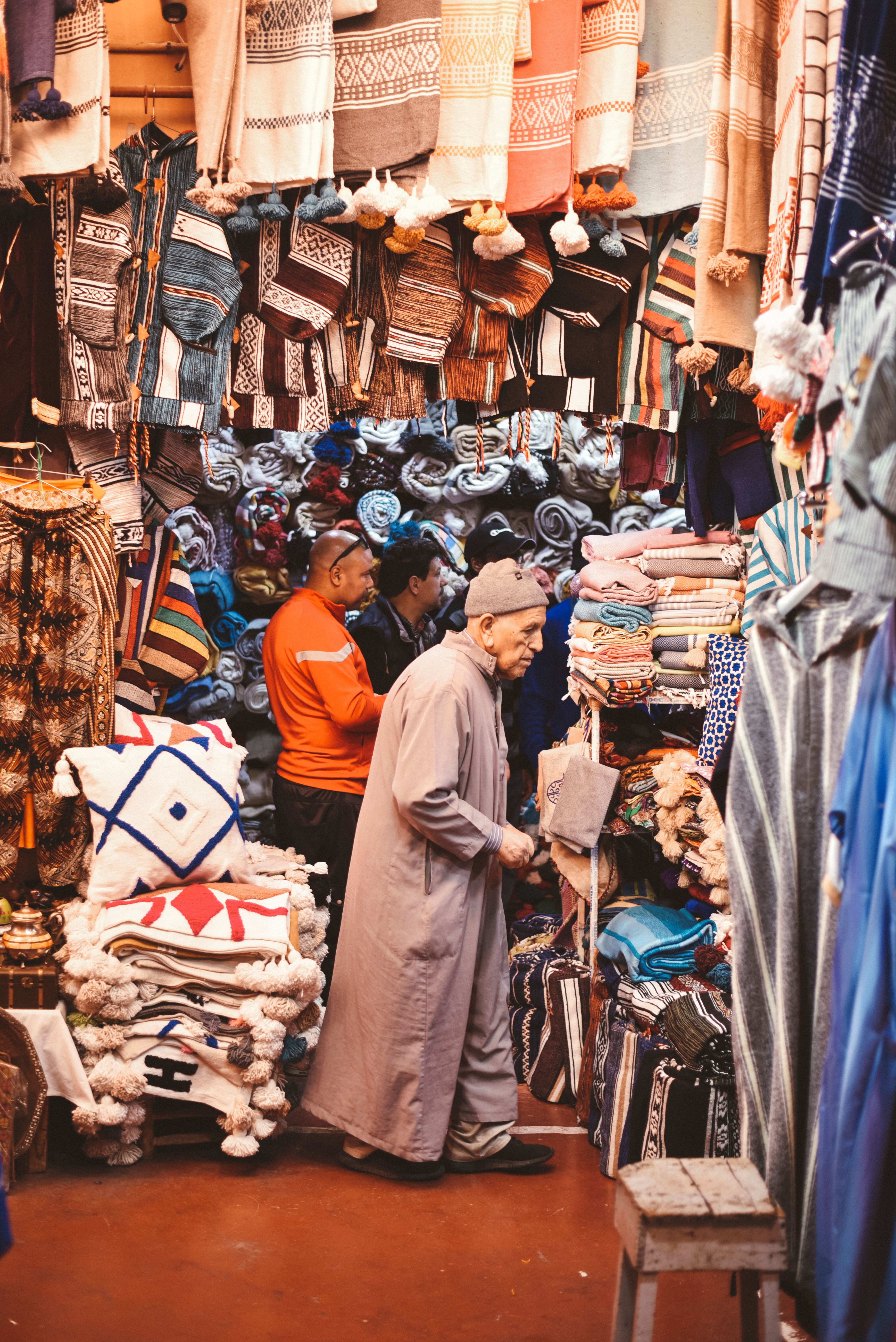
Souk El Had of Agadir is not just a simple market; it's a living legend, the beating heart of the city of Agadir and the largest covered market on the entire African continent. With over 6,000 shops, this commercial giant is much more than a place of exchange: it's a crossroads of stories, cultures, and emotions. Join us as we delve into the fascinating past of Souk El Had, from its distant origins to its resurrection after the devastating earthquake of 1960, exploring its constant evolution and its irreplaceable role in the economic and cultural fabric of the Souss-Massa region in Morocco.
From Deep Roots to the Tragedy of 1960
Before the terrible earthquake that struck Agadir in 1960, Souk El Had already existed, albeit in a different form. It was the nerve center of the city's economic and social life, a place where inhabitants came not only to trade but also to socialize, exchange news, and soak up the unique atmosphere of Morocco. Stalls overflowed with local products, traditional crafts, and spices with a thousand scents, reflecting the richness of the region.
The night of February 29, 1960, forever marked the history of Agadir. An earthquake of unprecedented violence devastated the city in a few seconds, claiming thousands of lives and reducing most of its infrastructure to ruins. Souk El Had was not spared. Its original structures, often modest and built according to the techniques of the time, collapsed, leaving behind a landscape of desolation. This catastrophe left a deep scar in the collective memory of the Gadiris, but it also forged a spirit of resilience and determination to rebuild, to rise from its ashes. The loss of the Souk was symbolic of the loss of a part of the city's soul, but the hope of seeing it reborn was already there.
The Resurrection of a Giant: Reconstruction and Modern Vision
In the aftermath of the earthquake, the challenge was immense: to rebuild Agadir. Political will and the energy of the inhabitants converged towards a common goal: to erect a new city, more modern, safer, while preserving its soul. The reconstruction of Souk El Had was a central element of this vision. It was not just about restoring it, but reinventing it, transforming it into a resilient structure, capable of meeting the needs of a growing city.
The new Souk El Had was conceived to be the largest in Africa, a testament to Agadir's ability to overcome adversity. Its design integrated modern construction standards, ensuring safety and durability. The works were colossal, mobilizing considerable human and material resources. Step by step, the walls rose, the aisles took shape, and the merchants, with their courage and perseverance, began to reinvest the premises. This is how the Souk El Had we know today was born: a majestic enclosure, spanning hectares, housing over 6,000 stalls and shops, organized into sections dedicated to each type of product. This renewal was not just architectural; it was the symbol of a community that refuses to give up, that draws strength from its past to build a better future for Agadir and Morocco.
A Beating Heart: Economic and Cultural Role in Souss-Massa
Today, Souk El Had is much more than a market. It is a true economic engine for the Souss-Massa region, generating thousands of direct and indirect jobs. It is the main supply center for households in Agadir and surrounding towns, offering an incredible variety of products, from fresh fruits and vegetables to meats and fish, as well as fine grocery products. But its reach doesn't stop there. It is also a major tourist attraction, listed among the must-sees for anyone visiting Agadir.
Visitors delightfully lose themselves among the aisles dedicated to Moroccan craftsmanship, where one can find colorful babouches, finely chiseled silver jewelry, traditional pottery, and carved woodwork. The carpet section is a feast for the eyes, with Berber and Arab motifs of unparalleled richness, each telling a story. Spices, meanwhile, perfume the air with intoxicating aromas, inviting discovery of the flavors of local gastronomy. Souk El Had is also a conservatory of traditions. It is there that one can observe ancestral trades, listen to merchants eloquently praise their products, and feel the authentic pulse of Moroccan life. It embodies the spirit of enterprise, generosity, and legendary hospitality of Morocco, making every visit an immersive and memorable experience.
From its humble origins to its stature as an African commercial giant, the history of Souk El Had of Agadir is an epic of resilience, reconstruction, and prosperity. It has overcome trials, risen stronger and larger, to become not only the economic lung of Agadir but also a vibrant symbol of Moroccan culture and identity. Every stone, every stall, every face encountered in this market tells a part of the history of Morocco and the tenacity of its people. Visiting Souk El Had is to offer oneself an authentic dive into the heart of Agadir, an unforgettable experience that awakens the senses and nourishes the soul. It is an invitation to discover the living heritage of a proud nation resolutely turned towards the future, while honoring its past.