
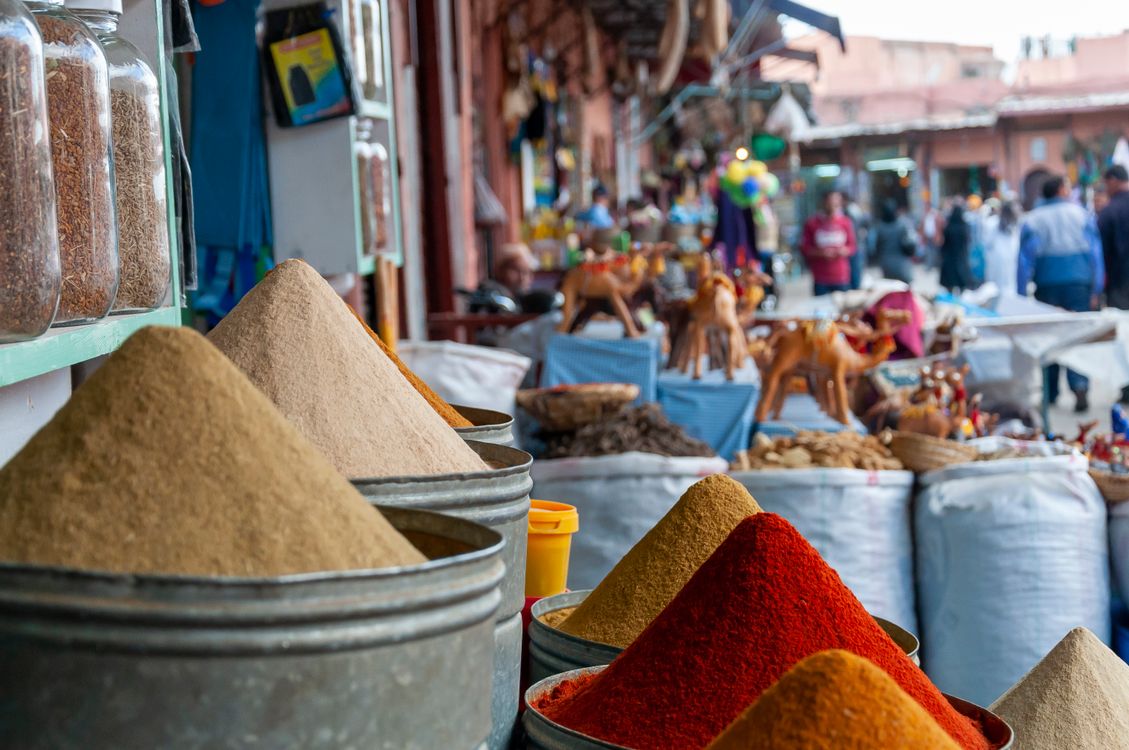
Welcome to Souk El Had in Agadir, a true sensory labyrinth and Africa's largest covered market! Here, in the heart of the Souss region, every alley whispers stories, every stall overflows with colors and aromas that capture the very essence of Morocco. For any visitor, whether a seasoned chef or a curious explorer, discovering spices is an essential step. These often-ancient powders and seeds are the soul of Moroccan cuisine, transforming simple ingredients into memorable feasts. Souk El Had, with over 6,000 shops, is a crossroads where the scents of land and sea meet, offering an unparalleled palette of fresh and aromatic spices. You are about to dive into a world where Safran, Ras el Hanout, Cumin, Curcuma, and Cannelle are not just condiments, but invitations to travel and discover a rich culinary culture. Get ready to learn how to recognize true treasures, where to buy them at the best value in our iconic covered market, and how to incorporate them to enhance your own culinary creations. Agadir, gateway to Souss-Massa, opens its doors to its most authentic flavors, a culinary heritage passed down through generations. Let your nose and taste buds guide you!
The Stars of Agadir's Stalls: Recognizing and Choosing Your Spices
At Souk El Had, quality is king. Here's how to identify exceptional spices:
- The Safran of Agadir (or Souss): This "golden thread" is the most precious spice. Look for long, deep red filaments with a slightly lighter tip. Avoid powder, which is often falsified. Good Safran will have a floral and slightly honeyed scent. To test it, infuse a few strands in hot water: it should release a gradual, not immediate, yellow-orange color.
- The Ras el Hanout: Literally "the head of the shop," this complex blend can contain 20 to 40 different spices. Its aroma should be rich, warm, and balanced, with no single spice dominating. Ask the vendor to let you smell it: it should evoke the warmth of Moroccan markets. Its color varies from yellow-orange to brown, depending on its composition. It's the soul of festive Tajines and Couscous.
- The Cumin (Kamoun): Essential in Moroccan cuisine, whole Cumin (seeds) is always preferable to powder, as it retains its aromas better. The seeds should be well-formed, uniformly colored, and emit an earthy, warm, slightly bitter scent. Powdered Cumin should be freshly ground and light brown.
- The Curcuma (Kharqoum): Known for its vibrant yellow color and benefits. At the souk, you'll often find the fresh root, similar in appearance to ginger, but with intense orange flesh. In powder form, it should be bright yellow, lump-free, and have a slightly peppery, earthy scent. It's an incomparable natural dye and a pillar of Moroccan cuisine.
- The Cannelle (Qarfa): Moroccan Cannelle often comes in thick, brittle sticks or powder. Look for sticks that emit a powerful, sweet, woody fragrance. Ceylan Cannelle is milder and more complex than Cassia. In powder form, it should be warm brown and have an intense scent, a sign of freshness.
The Art of Buying at Souk El Had: Expert Tips
Souk El Had is a vibrant place of life and exchange, and buying spices there is an experience in itself. Here are some tips to guide you:
- Talk to the Vendors: The spice merchants (called "Attar") are wells of knowledge. Don't hesitate to ask questions about the origin of the spices and their use. They will be happy to share their expertise.
- Prioritize Bulk and Freshness: Buy your spices in bulk. At Souk El Had, many merchants grind spices on the spot, right before your eyes, guaranteeing incomparable freshness. This is a guarantee of quality and intense aromas.
- Trust Your Senses: Smell the spices, observe their color, their texture. A quality spice has a pronounced fragrance and a vibrant color. Avoid those that seem dull or odorless.
- Buy in Small Quantities: To best preserve aromas, it's better to buy smaller quantities more frequently, especially for powders. Then store them in airtight containers, away from light and humidity.
- Negotiate with a Smile: Negotiation is part of souk culture. Always do it with respect and good humor. It's a friendly game that can help you get a better price.
Elevate Your Cooking: Using Moroccan Spices
Now that you have your treasures, it's time to make them sing in the kitchen!
- Safran: A few strands infused in a little hot liquid (water, broth) before being added at the end of cooking. Ideal for rice, sauces, chicken Tajines, and even pastries.
- Ras el Hanout: The master spice for Tajines, Couscous, or meat marinades. Add it at the beginning of cooking to release all its aromas. Also perfect in meatballs.
- Cumin: Essential for grilled meats (skewers, Kefta), vegetables (carrots, eggplants), and soups. Powdered Cumin is often sprinkled at the end of cooking or on served dishes. Whole seeds can be toasted to intensify their flavor.
- Curcuma: Its golden color is perfect for rice dishes, fish or poultry Tajines, and soups. To benefit from its virtues, always combine it with black pepper, which increases its absorption. The fresh root can be grated into smoothies or juices.
- Cannelle: Used in sweet and savory dishes like lamb Tajines with prunes, Pastillas, or Briouates. It divinely perfumes Moroccan pastries, mint tea, and even certain hot drinks.
Local Chef's Tip: Always start with small quantities and adjust to your taste. Moroccan spices are powerful, and a few pinches are often enough to transform a dish.
By visiting Souk El Had in Agadir, you don't just leave with spices, but with a piece of Morocco's soul. These fragrant treasures are invitations to explore a rich culture and flavorful cuisine. May this guide inspire you to experiment and share the delights of Moroccan gastronomy with your loved ones. Come experience the unique Souk El Had and let yourself be enchanted by its thousand and one flavors! Your culinary journey begins here, in the heart of Agadir.